 MarketLair
When Proxy Cards Actually Make Sense (And When They Don't)
Proxy cards are one of the more misunderstood parts of the hobby, and the "should I use one?" question comes up constantly.
What a proxy actually is. A proxy is a stand-in for a real card. At the simplest end, that might be a card name written on a piece of paper for testing a deck. At the other end are professionally printed custom cards with alternate artwork, premium finishes, and the full rules text of the card they're representing.
The purpose is basically the same: letting you play, test, or enjoy a card without putting the genuine version on the table.
Where they're allowed -- and where they're not. This is the important distinction.
Sanctioned tournament play generally requires genuine, tournament-legal cards. A custom proxy isn't a workaround for entering an official event with a card you don't own. Tournament officials may sometimes issue substitute cards under specific circumstances, but that's different from bringing your own proxy.
Casual play is another story.
Commander groups, kitchen-table players, testing sessions, cubes, and other casual environments often allow proxies depending on the people involved. Some local game stores allow them during casual play or particular unsanctioned events as well.
The simplest rule is also the best one: ask the people you're playing with.
If you're playing an organized event, check with the store or tournament organizer. If you're sitting down for Commander with friends, have the conversation before the game starts.
Where proxies start making a lot of sense. Price is the obvious example.
MarketLair's own market data gives us some extreme examples. In our Attack of the Vine! chase-card breakdown, Belle & Beast - Certain as the Sun was tracked at $2,188.63, while Lilo & Stitch - Fun-Loving Friends was at $1,681.59. Our Riftbound: Vendetta market check had Akali, Rogue Assassin at $2,873.33.
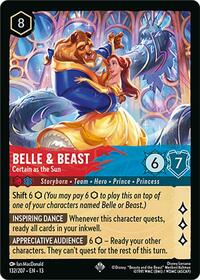

At those prices, most players aren't deciding whether to buy four copies. They're deciding whether they'll ever play with the card at all.
But proxies don't only make sense when a card costs thousands of dollars.
A $60 card you aren't sure belongs in your deck is still $60. A $100 staple you want to use across four casual Commander decks is still $400 if you buy four copies. An expensive collectible you already own may also be something you'd rather keep safely in a binder than shuffle repeatedly.
That's where proxies can be genuinely useful:
- Testing before buying. Play the deck first and find out whether the expensive card is actually worth purchasing.
- Casual deck building. Build around cards that would otherwise put the deck outside your budget.
- Protecting valuable originals. Keep the collectible copy protected while using a stand-in during casual games, when your playgroup allows it.
- Multiple decks. Avoid buying the same expensive casual staple over and over just because several decks use it.
- Custom artwork. Turn a card you already enjoy into something personal to your deck, character, theme, or playgroup.
That doesn't make the original card worthless. In fact, collecting and playing don't have to be the same thing.
You can want the genuine card for your collection while also deciding that shuffling a four-figure collectible into a casual deck doesn't make much sense.
When a proxy doesn't make sense. If you're preparing for sanctioned competitive play, build and practice with the requirements of that event in mind. You don't want to discover at registration that cards you've been relying on aren't legal for the tournament.
They're also a bad fit when the people you're playing with aren't comfortable with them. Casual games work because everyone agrees on what kind of game they're sitting down to play.
And if you're buying something represented as a genuine collectible, that's an entirely different issue. A custom proxy should be treated as a custom proxy -- not passed off or sold as an authentic card.
Who we'd point you to. If you've decided a custom proxy makes sense for how you play, we'd point you toward ProxyLair.
There is an important disclosure here: ProxyLair and MarketLair are run by the same person.
ProxyLair focuses on individually produced custom cards rather than a mass-produced catalog. That means the goal isn't just reproducing whatever cards happen to be available in inventory -- it's creating the specific card, alternate artwork, treatment, or complete deck you're looking for.
If you're staring at a $2,000 chase card and thinking, I'd love to actually play with that, but absolutely not for $2,000, a proxy might make perfect sense.
And if you're staring at a $40 card wondering whether it's even good in your deck, it might make just as much sense there too.
Disclosure. MarketLair and ProxyLair are operated by the same owner. ProxyLair is a custom TCG proxy card design and production studio. Articles published by MarketLair are drafted using current market data and reviewed and approved by the owner before publication.